Soccer Tryout Plan: A Comprehensive Guide
Crafting a soccer tryout plan PDF streamlines organization, ensuring a smooth evaluation process. Include drills assessing technique, tactical understanding, and physical fitness, mirroring practice sessions.
Effective tryouts require unbiased evaluators and clear criteria, benefiting both coaches and players during the selection process.
Soccer tryouts represent a pivotal moment for both aspiring players and coaching staff, serving as the initial assessment point for team composition. A well-structured soccer tryout plan PDF is therefore indispensable, transforming what could be a chaotic event into a streamlined, objective evaluation process. This document isn’t merely a schedule; it’s a blueprint for identifying talent, ensuring fairness, and ultimately building a competitive team.
The core principle underpinning effective tryouts is mirroring actual practice sessions, as highlighted by Brant Wojack. This approach allows players to demonstrate their abilities in a familiar environment, reducing anxiety and providing a more accurate representation of their skills. The PDF plan should detail specific drills focusing on technical proficiency – dribbling, passing, and shooting – alongside tactical awareness and physical conditioning.
Furthermore, a comprehensive plan addresses logistical considerations, including registration procedures, required documentation, and the roles of evaluators. It’s crucial to establish clear evaluation criteria before the tryout begins, minimizing bias and ensuring consistent assessment across all participants. The PDF serves as a central repository for all this information, accessible to both staff and potentially, players and parents, fostering transparency and professionalism.
Ultimately, a thoughtfully designed soccer tryout plan PDF isn’t just about finding the best players; it’s about creating a positive and informative experience for everyone involved.
II. Pre-Tryout Planning & Organization
Meticulous pre-tryout planning is paramount, and a detailed soccer tryout plan PDF is the cornerstone of this process. This document should begin with defining clear objectives: what specific skills and attributes are you seeking in players? Next, assemble a reliable evaluation team – ideally, the head and assistant coaches, as Wojack suggests – to ensure consistent and unbiased assessments.
Organizationally, the PDF must outline a comprehensive registration process, including online forms and clear communication regarding required documentation (covered later). Station planning is critical; design drills that efficiently assess key skills – dribbling, passing, shooting, agility – and allocate sufficient time for each. Consider grouping players strategically to facilitate observation.
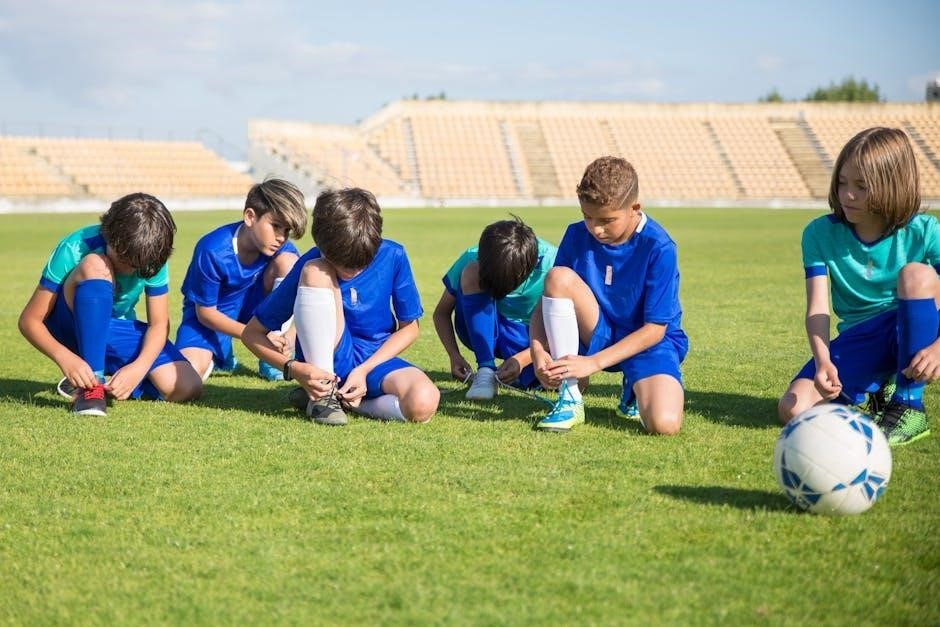
Furthermore, the PDF should detail equipment needs: cones, balls, goals, agility ladders, and any necessary first-aid supplies. A designated area for check-in and a clear layout of the tryout field are essential. Anticipate potential challenges – inclement weather, player injuries – and develop contingency plans.
Finally, proactively communicate the tryout schedule and expectations to prospective players and their families, ensuring a smooth and professional experience. A well-prepared soccer tryout plan PDF minimizes chaos and maximizes the effectiveness of the evaluation process.
III. Defining Player Evaluation Criteria
A robust soccer tryout plan PDF necessitates clearly defined player evaluation criteria. These criteria should be objective and directly linked to the team’s tactical approach and desired player profile. Categorize assessments into technical skills (dribbling, passing, shooting accuracy), tactical awareness (positional understanding, decision-making), and physical attributes (speed, agility, endurance).
Within each category, establish specific, measurable benchmarks. For example, passing accuracy could be assessed by percentage of completed passes within a designated target area. Tactical awareness can be gauged through observation during small-sided games, focusing on positioning and support play. Physical fitness can be measured using standardized tests like shuttle runs and sprint times.
The PDF should include a standardized evaluation form for each assessor, ensuring consistency. Each criterion should have a scoring rubric – perhaps a scale of 1-5 – with detailed descriptions for each level;
Emphasize the importance of unbiased evaluation; assessors should focus solely on performance, avoiding personal preferences. Clearly communicate these criteria to the evaluation team before the tryout to ensure alignment and a fair assessment process. A well-defined criteria section within the soccer tryout plan PDF is crucial for objective player selection.
IV. Tryout Logistics & Registration
A comprehensive soccer tryout plan PDF must detail all logistical aspects and the registration process. This includes specifying the date, time, and exact location of the tryouts, with clear directions and parking information. Outline the tryout duration and any breaks scheduled throughout the session. The PDF should also clearly state the age groups and birth year eligibility for each tryout session.
Registration should be streamlined, ideally through an online pre-registration system. This allows for accurate player counts and efficient check-in on tryout day. The PDF should link directly to the registration form and outline any associated fees. Include a clear deadline for registration to facilitate planning.
Detail the check-in procedure, specifying what players need to bring (identification, medical information, etc.). Consider a designated check-in area with volunteers to manage the process.
The soccer tryout plan PDF should also address potential weather contingencies, outlining a backup plan in case of inclement weather. Finally, include contact information for the tryout coordinator for any questions or concerns. Efficient logistics and a smooth registration process contribute to a positive tryout experience.
V. Required Documents & Waivers
The soccer tryout plan PDF must explicitly list all required documents players must present during registration. This typically includes a copy of the player’s birth certificate (or passport) to verify age eligibility, and a recent photograph for identification purposes. A current medical release form, signed by a parent or guardian, is crucial for addressing any potential medical emergencies during the tryout.
Most importantly, a comprehensive waiver form is essential. This waiver should clearly outline the inherent risks associated with participating in soccer tryouts and release the organization from liability in case of injury. The PDF should include a downloadable waiver form, or a link to an online version, that must be completed and signed prior to participation.
The soccer tryout plan PDF should also specify if any insurance information is required. Consider including a section for emergency contact details, including phone numbers and any relevant medical conditions or allergies. Ensuring all necessary documentation is collected upfront streamlines the check-in process and protects both the organization and the players.
VI. Tryout Day Schedule – A Detailed Breakdown
The soccer tryout plan PDF should feature a meticulously crafted schedule, outlining every segment of the tryout day. Begin with a clear start and end time, alongside designated check-in periods. A detailed breakdown of each activity is vital, including the duration allocated for warm-up (15-20 minutes), technical skill assessments, small-sided games, and physical fitness evaluations.
The PDF must specify transition times between activities, preventing wasted time and maintaining momentum. Include scheduled breaks for hydration and rest, particularly during warmer weather. Clearly indicate the location for each drill or activity, utilizing a field diagram if possible. A sample schedule might include: 9:00-9:20 AM – Check-in; 9:20-9:40 AM – Warm-up; 9:40-10:30 AM – Technical Skills; 10:30-11:30 AM – Small-Sided Games; 11:30 AM – Cool Down.
This detailed schedule, embedded within the soccer tryout plan PDF, ensures a professional and organized tryout experience, allowing players to perform at their best and evaluators to accurately assess their abilities.
VII. Warm-up & Dynamic Stretching (15-20 minutes)
The soccer tryout plan PDF must dedicate 15-20 minutes to a comprehensive warm-up and dynamic stretching routine. This phase is crucial for injury prevention and preparing players for peak performance. Begin with light cardio, such as jogging around the perimeter of the field, gradually increasing intensity.
Follow this with dynamic stretches, focusing on movements that mimic soccer-specific actions. Examples include leg swings (forward, backward, and lateral), arm circles, torso twists, high knees, butt kicks, and walking lunges. The PDF should visually illustrate each stretch, ensuring correct form. Avoid static stretching during this phase, as it can temporarily reduce power output.
Emphasize the importance of controlled movements and proper technique. This warm-up segment, detailed within the soccer tryout plan PDF, sets the stage for a safe and effective tryout, allowing players to showcase their skills without the risk of injury. Include a brief explanation of the warm-up’s purpose to the players.
VIII. Technical Skill Assessment
The soccer tryout plan PDF should outline a structured technical skill assessment, forming the core of player evaluation. This section focuses on fundamental abilities – dribbling, passing, and shooting – and provides a standardized method for comparison. Each skill should have dedicated drills with clear evaluation criteria detailed within the PDF.
The assessment isn’t about complex maneuvers, but rather demonstrating proficiency in core techniques. Drills should progressively increase in difficulty, challenging players while remaining achievable. Evaluators, as noted in the PDF, must remain objective, focusing on technique, accuracy, and consistency, not just flashy plays.
Consider incorporating a scoring rubric within the soccer tryout plan PDF to ensure consistent evaluation across all players. This rubric should define specific performance indicators for each skill. The goal is to identify players with a solid technical foundation, capable of executing fundamental skills effectively under pressure. This section should also detail the equipment needed for each drill.
IX. Dribbling Drills & Evaluation
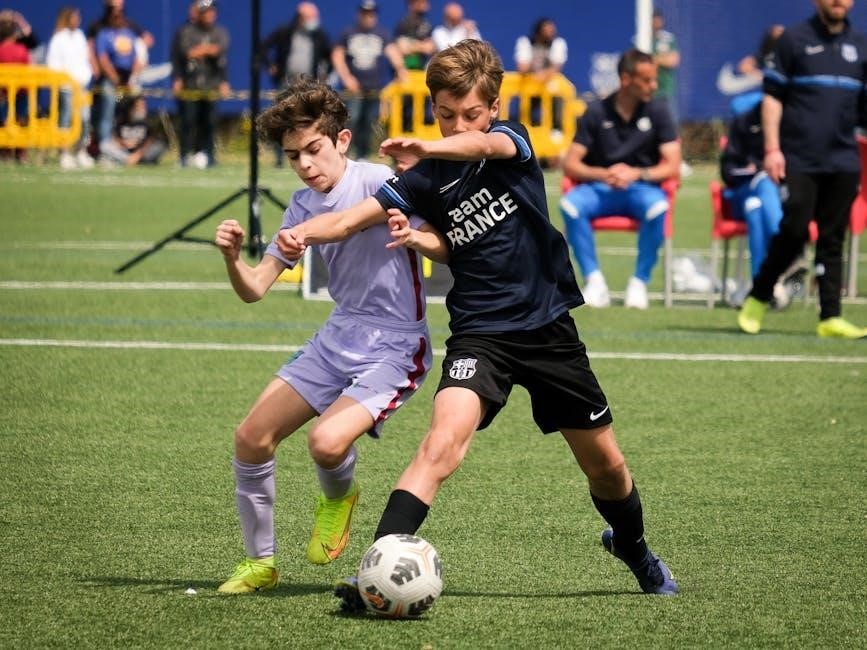
The soccer tryout plan PDF must detail specific dribbling drills designed to assess a player’s close control, agility, and ability to change direction with the ball. Include cone drills – slalom courses testing agility and touch – and drills focusing on dribbling at speed, simulating game-like scenarios. The PDF should specify the drill setup, including cone spacing and course length.
Evaluation criteria, clearly outlined in the PDF, should focus on technique: keeping the ball close, head up awareness, and the ability to shield the ball from defenders. Assess the player’s comfort with both feet and their ability to navigate tight spaces. Observe their decision-making – when to accelerate, decelerate, or change direction.
A scoring system within the PDF can quantify performance. Consider points for speed, control, and technique. Evaluators should note any significant weaknesses, such as a reliance on one foot or a lack of spatial awareness. The PDF should also include a section for evaluator notes, allowing for detailed observations beyond the scoring rubric.
X. Passing Accuracy & Range Assessment
The soccer tryout plan PDF should incorporate passing drills evaluating both short and long-range accuracy, as well as the player’s ability to weight passes appropriately. Include a stationary passing drill, targeting specific cones or partners at varying distances. Progress to passing while moving, simulating distribution from midfield or defensive positions. The PDF must detail drill setups, distances, and target sizes.
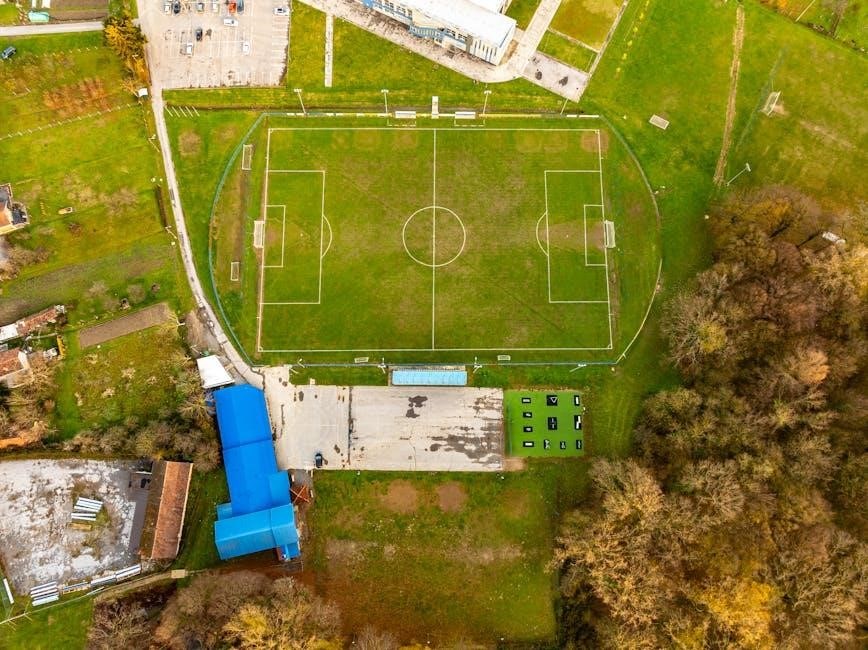
Evaluation criteria, detailed in the PDF, should prioritize accuracy – completing passes to the intended target. Assess the player’s technique: proper foot placement, follow-through, and body positioning. Range is crucial; evaluate their ability to consistently deliver accurate passes over both short and long distances. Observe their vision and decision-making – selecting the appropriate passing lane and weight.
A scoring system within the PDF can quantify performance, awarding points for accuracy, weight, and speed of delivery. Evaluators should note any tendencies, such as a preference for short passes or difficulty with long-range distribution. The PDF should include space for evaluator comments, capturing nuanced observations beyond the numerical score.
XI. Shooting Technique & Power Evaluation
The soccer tryout plan PDF must detail shooting assessments focusing on technique and power. Drills should include shooting from stationary positions, emphasizing proper form – plant foot placement, body angle, and follow-through. Progress to shooting after a dribble or first touch, evaluating the player’s ability to generate power under pressure. The PDF should clearly outline drill setups, distances to the goal, and any constraints (e;g., using only the instep).
Evaluation criteria, documented in the PDF, should prioritize technique: a compact swing, striking the ball cleanly, and maintaining balance. Assess power – the velocity and trajectory of the shot. Accuracy is vital; evaluate the player’s ability to hit targets within the goal. Observe their shot selection – choosing appropriate shooting techniques based on the situation.
A scoring rubric within the PDF can quantify performance, awarding points for technique, power, and accuracy. Evaluators should note any technical flaws, such as dropping the head or losing balance. The PDF should provide space for detailed comments, capturing observations about the player’s shooting potential and areas for improvement.
XII. Tactical Awareness & Game Intelligence

The soccer tryout plan PDF needs to incorporate assessments of tactical understanding and game intelligence, moving beyond purely physical skills. Small-sided games (5v5, 7v7) are crucial, allowing observation of decision-making in dynamic situations. The PDF should detail game rules, field dimensions, and specific observation points for evaluators.
Evaluators, guided by the PDF, should assess positional play – do players understand their roles and responsibilities? Observe their movement off the ball, creating passing lanes and supporting teammates. Decision-making is key: do they choose the right pass, dribble, or shot based on the game state? Look for players who anticipate play and react proactively.
The PDF should include scenario-based drills, presenting players with tactical dilemmas. For example, a 2v1 situation requiring quick passing and movement. A scoring rubric within the PDF can quantify tactical awareness, awarding points for intelligent runs, accurate passing, and effective decision-making. Detailed notes on each player’s tactical strengths and weaknesses are essential.
XIII. Small-Sided Games (5v5, 7v7) – Observation Focus
The soccer tryout plan PDF must meticulously outline the observation focus during small-sided games (5v5, 7v7). These games are pivotal for evaluating players within a game context, revealing tactical awareness and decision-making skills. The PDF should specify the duration of each game, the number of games per player, and the key performance indicators (KPIs) for evaluators.
Evaluators, referencing the PDF, should prioritize observing players’ ability to maintain possession under pressure, their passing accuracy and weight, and their movement off the ball to create space. Note their defensive positioning, tackling technique, and ability to win 1v1 duels. Crucially, assess their communication skills – are they actively communicating with teammates?
The PDF should include a standardized observation sheet, allowing evaluators to consistently rate players on these KPIs. Look for players who demonstrate initiative, make intelligent runs, and contribute to both attacking and defensive phases. The PDF should emphasize that these games are not about individual brilliance, but about teamwork and tactical understanding.
XIV. Positional Play & Decision-Making Scenarios
The soccer tryout plan PDF needs detailed scenarios testing positional play and decision-making. These aren’t just about skill; they reveal a player’s soccer IQ. The PDF should outline specific scenarios – for example, a 3v2 attacking situation, a quick transition from defense to attack, or dealing with a high press. Each scenario must have clear objectives and evaluation criteria.
Evaluators, guided by the PDF, should observe how players recognize space, support teammates, and make appropriate passing choices under pressure. Assess their ability to read the game, anticipate opponents’ movements, and adapt to changing situations. Note their first touch, vision, and composure when making decisions.
The PDF should emphasize evaluating players in multiple positions to gauge versatility. Observe their understanding of positional responsibilities – do they maintain shape, offer support, and cover for teammates? The PDF should include a scoring rubric for each scenario, ensuring consistent and objective evaluation. These scenarios are vital for identifying players who can think critically and execute effectively.
XV. Physical Fitness Evaluation
The soccer tryout plan PDF must incorporate a robust physical fitness evaluation. This section isn’t solely about raw speed; it assesses endurance, agility, and overall athleticism crucial for sustained performance. The PDF should detail specific tests – shuttle runs to gauge agility, sprint tests for speed, and a distance running assessment for endurance.
Clearly define the parameters for each test within the PDF: distances, timing methods, and rest intervals. Evaluators should record times accurately and consistently. The PDF should also include benchmarks or standards for each age group or skill level, providing a reference point for comparison.
Beyond these core tests, consider incorporating more soccer-specific fitness drills. Small-sided games with high intensity can assess a player’s ability to maintain effort throughout a simulated match. The PDF should emphasize the importance of proper warm-up and cool-down procedures to prevent injuries. This section, detailed in the PDF, provides valuable insight into a player’s physical capabilities and potential.
XVI. Agility & Speed Tests (Shuttle Runs, Sprint Tests)
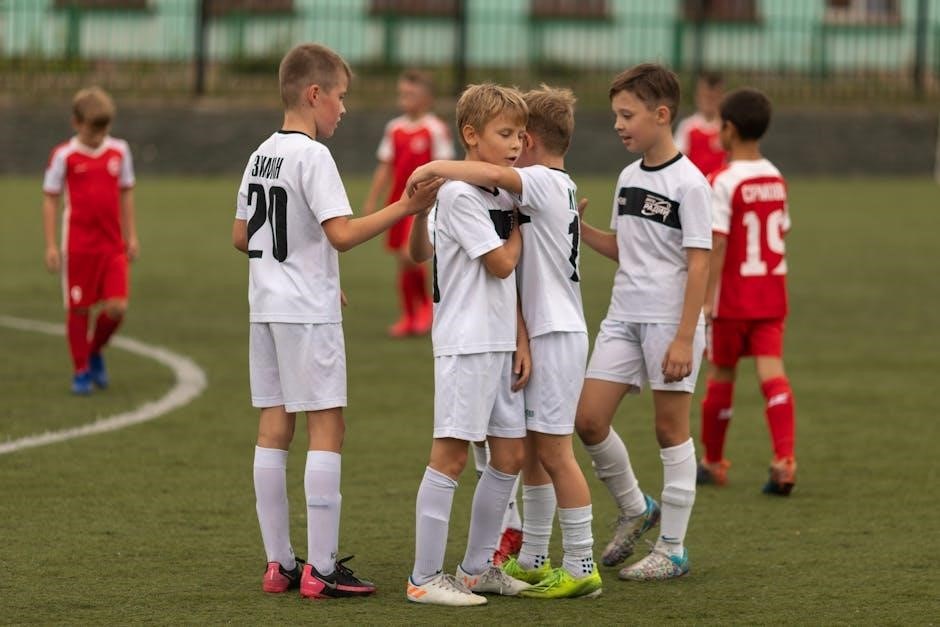
The soccer tryout plan PDF should meticulously outline agility and speed tests. Shuttle runs, like the 5-10-5, are excellent for evaluating a player’s ability to quickly change direction – a vital skill in soccer. The PDF must specify the distance between cones, the running pattern, and the recording method for timing.
Sprint tests, typically involving 30-40 yard dashes, assess linear speed. The PDF should detail the starting procedure (standing start vs. rolling start), the distance to be covered, and the timing mechanism. Multiple repetitions with adequate rest are crucial for accurate assessment. Evaluators should record each player’s best time.
The PDF should also include clear instructions for players regarding proper running technique and safety precautions. Consider incorporating a warm-up specifically designed to prepare muscles for high-intensity sprints. Benchmarks for acceptable times, categorized by age and position, should be included in the PDF to aid in objective evaluation. These tests, detailed in the PDF, provide quantifiable data on a player’s athletic potential.
XVII. Endurance Assessment (Distance Running)

The soccer tryout plan PDF must detail the endurance assessment protocol. While soccer isn’t solely about long-distance running, a base level of endurance is crucial. A common method is a timed run – typically 1.5 to 2 miles – designed to gauge a player’s cardiovascular fitness. The PDF should clearly state the distance, the course layout (including elevation changes), and the expected completion time benchmarks.
The PDF should emphasize the importance of pacing and maintaining a consistent effort throughout the run. Evaluators should observe players for signs of fatigue and proper running form. Recording each player’s completion time is essential for objective comparison. Consider including a recovery period before and after the run to minimize injury risk.
Alternative endurance assessments, like the Yo-Yo Intermittent Recovery Test, could also be detailed within the PDF. This test more closely simulates the stop-start nature of soccer. The PDF should provide clear instructions for administering the test and interpreting the results. Ultimately, the endurance assessment, as outlined in the PDF, helps identify players with the stamina to perform consistently throughout a match.
XVIII. Goalkeeper Specific Evaluation
The soccer tryout plan PDF requires a dedicated section for goalkeeper assessment, differing significantly from field player evaluations. This section should outline drills focusing on shot-stopping ability, reaction time, and distribution skills. Include specific scenarios – crosses, breakaways, and set pieces – to test the goalkeeper’s decision-making under pressure.
The PDF must detail the evaluation criteria for each drill. Assess technique (footwork, hand positioning), agility, and command of the penalty area. Evaluators should observe the goalkeeper’s communication with defenders and their ability to organize the defense. A scoring rubric within the PDF ensures consistent and objective evaluation.
Distribution drills – throwing and kicking – are vital. Assess accuracy, range, and the goalkeeper’s ability to initiate counter-attacks. The PDF should also include a section on mental toughness, observing the goalkeeper’s composure and resilience after conceding goals. Finally, the PDF should specify the equipment needed for the goalkeeper-specific evaluation, ensuring a smooth and effective tryout process.
XIX. Shot Stopping & Reaction Time Drills
The soccer tryout plan PDF must detail specific shot-stopping and reaction time drills. Begin with close-range drills, progressively increasing distance and shot speed. Include drills simulating game scenarios: deflecting shots from crosses, reacting to deflections, and saving breakaways. The PDF should specify the number of repetitions and the evaluation criteria for each drill.
Reaction time drills should incorporate visual cues and quick changes of direction. Evaluators should assess the goalkeeper’s footwork, hand positioning, and ability to quickly close down angles. The PDF should include a scoring rubric, focusing on technique, speed of reaction, and success rate. Vary shot types – ground balls, volleys, and headers – to comprehensively test the goalkeeper’s skills.
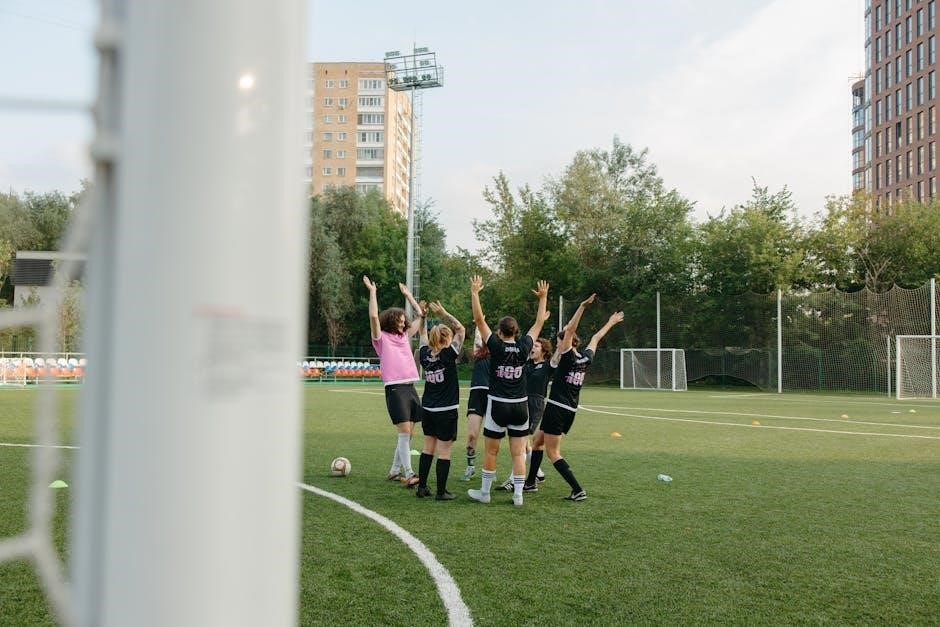
The PDF should also outline safety protocols for these drills, emphasizing proper warm-up and protective gear. Include a section for recording individual results, allowing for objective comparison between candidates. Finally, the PDF should detail the equipment required – goals, balls, cones – ensuring a well-organized and effective evaluation process.
XX. Distribution & Command of the Area
The soccer tryout plan PDF needs a dedicated section on evaluating a goalkeeper’s distribution skills and command of their penalty area. Drills should assess accuracy and range of throws, punts, and goal kicks, simulating realistic game situations. The PDF should specify target areas for distribution, evaluating the goalkeeper’s ability to initiate counter-attacks effectively.
Command of the area drills should focus on the goalkeeper’s ability to confidently claim crosses, organize defenders, and communicate effectively. Evaluators should observe their assertiveness, decision-making under pressure, and overall presence in the box. The PDF should include a scoring rubric, weighting factors like accuracy, power, and communication skills.
The PDF should also detail drills assessing the goalkeeper’s ability to sweep up through balls and react to loose balls in the penalty area. Safety protocols are crucial, emphasizing controlled movements and awareness of surroundings. A dedicated space for recording individual results will facilitate objective comparison, ensuring a fair and thorough evaluation process.
XXI. Post-Tryout Evaluation & Selection Process
The soccer tryout plan PDF must detail a structured post-tryout evaluation process. This section outlines how evaluators consolidate their observations, ensuring a fair and objective selection. The PDF should include standardized evaluation forms, mirroring the criteria defined earlier – technical skill, tactical awareness, and physical fitness.
A crucial element is a team discussion amongst evaluators, comparing notes and resolving discrepancies. The PDF should emphasize the importance of unbiased decision-making, minimizing personal preferences. A weighted scoring system, outlined in the PDF, helps rank players based on overall performance.
The PDF should also address communication with players and parents. A clear timeline for notification of results is essential, alongside a concise explanation of the selection criteria. Providing constructive feedback, even to unsuccessful candidates, demonstrates professionalism and fosters a positive club image. Finally, the PDF should document the entire selection process for transparency and accountability.
XXII. Creating the Tryout PDF Document

Developing a comprehensive soccer tryout plan PDF is paramount for organization and consistency. Utilize software like Microsoft Word, Google Docs, or Adobe InDesign to structure the document. Begin with a clear title page outlining the tryout details – date, time, location, and age group.
Subsequent sections should mirror the tryout’s phases: pre-tryout information, evaluation criteria, a detailed schedule, and specific drill descriptions. Include standardized evaluation forms as fillable PDFs for easy data collection. The PDF should clearly define roles and responsibilities for evaluators.
Visual aids, such as diagrams of drill setups, enhance clarity. Ensure the PDF is easily navigable with a table of contents and clear headings. Prioritize a professional layout and consistent formatting. Finally, save the PDF with security features to prevent unauthorized modifications, ensuring the integrity of your soccer tryout plan.


0 Comments